Featured

They Cost How Much?!?

By: Haley Taylor

Ice hockey began in 1834 and has long and rich history, specifically in North America. Hockey has changed significantly since its inception; the perception of who can play hockey has changed and it is a problem. Hockey was once known as a working-class sport. It was not unusual that men in that time period would go to work and then come home and lace them up to play on the local pond. Everyone had a pair of skates; everyone was able to get their hands on a stick. It was (and arguably still is) the great Canadian pastime.

There has been a shift in how hockey is played, consumed, and taught as time has gone on. National Hockey League games are now filmed for national television, hockey has now spread throughout the world, and the highest paid player in the NHL is making over 10 million dollars a year. Like a pyramid, what happens at the top eventually trickles down to the bottom. The bottom in hockey’s case is minor hockey. Minor hockey could be compared to rec football or AA basketball in the states; it is divided by ages and its normally how kids learn the basics of hockey and teamwork.  Enrollment for minor hockey has reached all-time lows in the last couple of years because it is just too expensive and time consuming to sign up.

The estimated cost of sports gear for youth hockey increases as the child plays because kids are growing so fast, they constantly need to replace their equipment. The average paid of skates could range from one hundred to three hundred dollars depending on the brand and size. Youth/junior hockey sticks range from seventy-five to one hundred and twenty-five dollars; helmets are at least fifty dollars and could go up to one hundred and fifty. These three items are the bare minimum for playing, not to mention pads, practice jerseys, and the enrollment fees themselves. University of Alabama hockey player, Brian Seybold, knows this firsthand.

“It cost a lot of money. It was a bit more difficult because I am from Florida, and despite having two NHL teams, hockey is not common. I know my parents have sacrificed a lot for me to be able to do this,” said Seybold.

This fundamental problem has rooted itself and grew into multiple issues for the sport. The cost of hockey could also have something do to with the clear diversity problem hockey has. If a sport is already not seen as open to different racial backgrounds, on top of not being accommodating to every socio-economic class, you have the same flaw that hockey has. All you need to beginning playing basketball is a ball, same with football.

Sean Fitz-Gerald, author of Before the Light Go Out, writes about the changing face of youth hockey by visiting multiple hockey towns in Canada. He even speaks on his own experience with having a child in youth hockey and hardships it could bring.

“There’s a lot of personal challenges that comes with balancing it all. A job, family life, and making sure they (the kids) are taken care of. I wanted to write it to maybe shine a light on how things could be better,” said Fitz-Gerald.

Accessibility is the key to growing anything. Access to time, and money; people inside of hockey have tried to make hockey a sport that anyone can play. Players often donate money or gear to local hockey clubs to help the kids. Organizations hold nights to showcase the talent near their cities. Making hockey a sport for everyone is going to have to be a joint effort from everyone involved.
Featured

Sports Related Book to Read

Unless you have been living under a rock (which might be a decent idea all things considering), you know that multiple professional sports leagues have been suspended due to COVID-19. It is important to keep your mind active while practicing social distancing. Reading sports related books is not only a good way to pass the time but also make up for the lack of real time sports content.

  1. Moneyball: The Art of Winning an Unfair Game

Starting out the list with a pretty well-known one. This book, written by Michael Lewis, follows the Oakland Athletics baseball team. It breaks how the team was managed despite the obstacles they faced. If you are someone into analytics and baseball, this is your book.  

  • Before the Lights Go Out

Sean Fitz-Gerald writes about the ever-growing problem in hockey: the cost of it. What was once a working man’s sport is now a luxury for many. The youth registration for hockey is reaching all time lows. Gerald uses an OHL team to tell the story of the challenges faced in this new age of hockey.

  • Bear: The Hard Life and Good Times of Alabama’s Coach Bryant

What kind of UA student would I be if I did not include a book about Alabama football? Josh Underwood teams up with Coach Bryant himself for this autobiographical book. It follows the trials and tribulations on and off the field that led to Bryant’s status as an American football icon.

  • Mindset: The New Psychology of Success

This takes a bit of turn from the rest of the books. It is not on the nose about sports but rather could be used to understand what makes athletes tick. Carol S. Dweck, after years of research, writes about the power of mindset and how it can influence our natural abilities. The beauty of this book is that it can be applied to not only sports, but your own life as well.

  • Friday Night Lights

It would be right if I did not end this list with a classic. You’ve heard about the television show and movie, but have you read the book? H.G. Bissinger chronicles the highs and lows of high school football in Texas. This book will leave with clear eyes, and full hearts while stuck at home.

It Starts at the Top: How Sport Journalist and the NHL handles Abuse

Journalism makes a huge foundation of how news of all kinds reaches the public. Recaps of championship wins and heartwarming tales of rags to riches it the bread and butter of sports reporting. But the fundamental rule of journalism is getting the true story out in an ethical and non-bias manner. Being able to write truthful and honest stories is what separates great journalist from good ones.

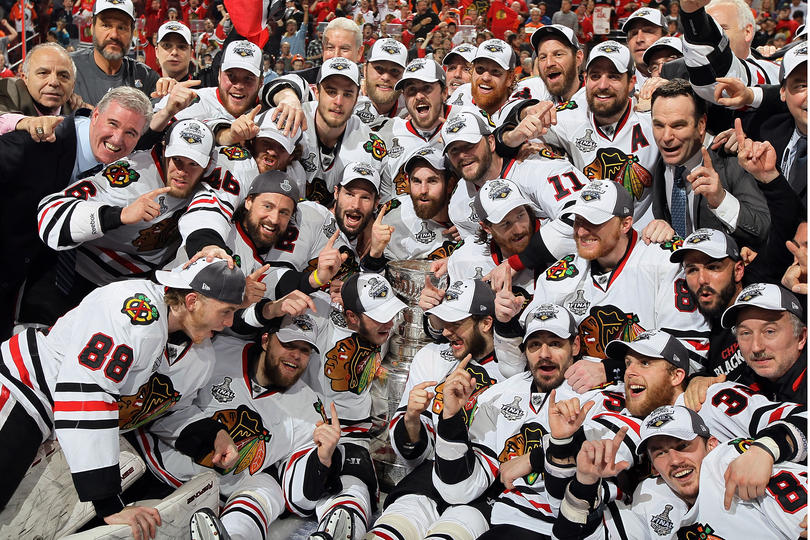
In May of 2021, the story broke that an ex-player (referred to as John Doe) of the Chicago Blackhawks filed a lawsuit against the club claiming that former video coach, Brad Aldrich, sexually assaulted him and another player during the Hawks’ 2010 Stanley Cup Run. The victim also alleges that multiple players and members of the front office knew about said incidents and kept it under wraps. There is now an “independent review” happening of the allegations as told by team CEO

PHILADELPHIA – JUNE 09: The Chicago Blackhawks pose for a team photo after defeating the Philadelphia Flyers 4-3 in overtime to win the Stanley Cup in Game Six of the 2010 NHL Stanley Cup Final at the Wachovia Center on June 9, 2010 in Philadelphia, Pennsylvania. (Photo by Jim McIsaac/Getty Images)

There are obviously many things wrong with the incident at hand, the first of course being the fact that anyone had to go through such trauma. But along with that the prevent problem of how sports journalism does not create room to talk about tough situations like this. The inability to hold organizations and people accountable comes top down from how the league handles serious situations like abuse. How can we expect journalist to create and write accurate narratives when the league they write about refuses to acknowledge wrong doings? There has been a lack of reporting on the lawsuit specifically from top journalist and analyst. The same journalist and analysist who we see every Saturday on our televisions.

Often when these stories are reported they are often broken or talked about by the same people. There is no rush to get information or interviews because it is much easier to stay comfortable and not speak on uncomfortable situations. Journalist like ESPN’s Emily Kaplan, and TSN’s Rick Westhead are often at the forefront of getting the story out. And if it isn’t a lack of reporting than it is publications putting important interviews like the one The Athletics’ Mark Lazerus did with Blackhawks’ captain Jonathan Toews.

Journalist, analysts, and any one in between may shy away from talking about difficult stories because the league themselves have a history of covering up and or just not discussing the “bad” parts of wanting to play professional hockey. Sexual, physical, and emotional abuse is unfortunately a problem that plagues hockey from the grassroots up. Stories of abuse get warped into stories “light hazing” and “team inanition”. The language being used by people working for the NHL is important and colors how people see the event at hand.

NHL Commissioner Garry Bettman gave his annual before Stanley Cup Finals press conference where he was met with several questions about the investigation. Questions ranging from how and when did the league know about the lawsuit to will the Blackhawks be reprimanded by the league. Bettman gave typical ex lawyer turned commissioner answers that did nothing to help give clarification of the matter from the leagues point of view.

 “I think everyone is jumping too far, too fast. This is going to be handled appropriately and professionally, and done right,” said Bettman.

That would be reassuring if the culture of shut up and play did not plague the league as it does. In instances like this, all anyone can hope if that justice is served in the correct way, and that punishment (if need be) is given harshly and appropriately. 

It does get old when every month, sport journalist goes through “reckonings” and pledge to speak up and speak out against unfair treatment just to go back to focusing on trades and contracts even though there are more important stories to report. Uplifting players speaking out, uplifting journalist that are willing to do the hard work and creating an open and healthy environment is the only way to not have allegations like this happening.

Time Makes all the Difference: A Reflection of Game and a Wild Year

Tuscaloosa, AL — Vintage and new hockey collide on March 10, 2019 at Capital One Arena. Alexander Ovechkin, Washington Capitals Captain and leading goal scorer for the league the last six years, head to head will rising star, Winnipeg Jet’s right winger Patrik Laine. Both European born players making their marks through their wicked shots. Despite that, they ironically are not the players that got on the board that Sunday evening; their paths are easily the most interesting from 2019 and on. The world of hockey has changed tremulously since 2019.

We are obviously in a pandemic, and fans are not in the stands for most NHL teams this 2020-2021. This is a carry over from the rules that were put in place during the 2019-2020 season playoffs. A complete opposite from the atmosphere from the Caps versus Jets game; a packed house on the weekend during the time many schools and universities are on spring break. Season ticket holders and first-time goers alike got to enjoy the game. Danielle Williams, D.C native, is no stranger to Caps hockey.

“The building was electric. Hearing the goal horn in person and not through a tv or computer can be jarring, but in the best way,” explained Williams.

Sensory overload is how I would describe it. The sounds of blades against the ice, the cheers from the fans, the smell of food. The goal horn was heard three times that night for the Capitals 3-1 victory over the Jets. It can be overwhelming for someone who has never been in that environment or for people with no knowledge of how intoxicating the sport of hockey can be. My mom, Lolitta Taylor, is not a hockey fan. She, like good mothers do, support me and my interest. But even with little knowledge of the game, she can understand why people love this sport.

“It’s kind of like football for me. I care a lot and want my teams to win the same way you want the Capitals to win. It’s nice to watch,” she tells me as she recalls that game.

Nicolas Backstrom, Carl Hagelin, and Lars Eller all contribute to the Caps three goals while Mathieu Perreault gets the loan goal for the Jets. Capitals backup goalie Phoenix Copley makes a dazzling 33 saves to get the Caps their seventh consecutive win. Like said before, the young star Laine does not get on the board, but he does make his mark in the game through imposing his will physically. Yet, another change from 2019, Laine has recently been traded to the Columbus Blue Jackets. This swap coming to fruition after Blue Jackets center Pierre Luc Dubois makes it known he is not happy in Ohio, and he wants out as soon as possible. Now Laine is doing the league mandated quarantine before being able to play. The trade has broken the heart of many Jets fans who adored the future 50 goal scorer.

“It was shock hearing that the locker room is was bad. We had all known that there as tension but the fact that leaders in the room did nothing was disappointing to see play out. It feels like it could’ve been avoided,” Brian May, previous Atlanta Thrashers follower turned Jets fanatic, elaborates on hearing the news of the trade.

The news of both Dubois and Laine possibly having problems in the locker room has brought a long-standing sports questions back to the forefront. What is too far when it comes to sports? How should coaches handle players, and does hockey culture breed problems through having to stay silent? Melanie Wickum is new to the Jets but familiar with the brand of hegemonic masculinity male dominated sports push.

“The idea of shutting up and putting up with treatment is apart of hockey and that’s why out spoken players are shunned and looked at as soft,” Wickum goes into being sad Laine is gone but happy if it means he is in a better environment.

It was interesting looking back at the Capitals versus Jets game and seeing how different both teams are, and how different the state of the NHL is. The amount of layover for both teams. Despite the change, the Capitals now sit at the same place they did when they won that game in 2019, at the top of their division.

White “Allies” in the NHL Please Do Better

            One of the biggest questions that was asked as the National Hockey League began to play again was league and players respectively going to continue the social justice strides that were made over the summer. In the wake of the murder of George Floyd and the influx of protest happening across North America, a plethora of hockey players spoke out against the injustice they were seeing. This is probably one of the first time in recent history that there was this uproar like this from the league. The NHL has a long history of being a “conservative” league when it comes to speaking out against issues happening in the world, especially when compared to other professional sports leagues.

The NHL’s Hockey is for Everyone initiative often feels empty because the league and the players never back it up with actual work…and the last couple of weeks prove that. Once again, the brunt the of work is being done by players of color. San Jose Sharks’ forward Evander Kane, alongside the help of ex NHL player Akim Aliu, has started the Hockey Diversity Alliance. This alliance was signed by several other player of color in hopes to working in tandem with the NHL to create an environment safe for black people and people of color who want to play the game.

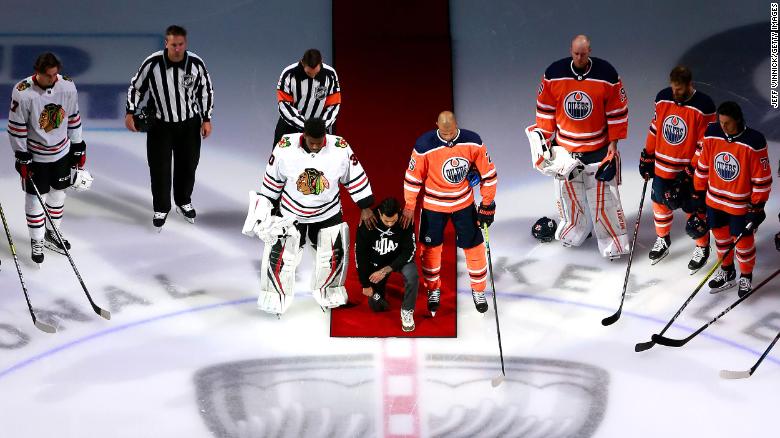
Minnesota Wild defensemen Matt Dumba, member of the Hockey Diversity Alliance, gave a moving speech before a Blackhawks vs Oilers playoff qualifying game and became the first NHL player to kneel during the National Anthem. JT Brown, who’s in the Tampa Bay Lighting system, first caused a stir back in 2017 when he raised his fist during the National Anthem and is known activist in his community. Colorado Avalanche center Nazem Kadri called the league out on needing to support their players of colors more (the clip conveniently being cut out by the Avalanche’s media team).

All of these men have put their careers on the line to speak out against treatment they have received themselves but also to create a dialogue to help the new generation of people of color who love hockey. The burden to change this sport should not be on the players who already have to deal with not being supported based off the color of their skin.

“Lonely” is how Brown described the feeling of being not only the lone black players on a team, but also the only players willing to say anything about the injustices that plague the league.

The white allies in the league need to start putting their money where their mouth is. Tyler Seguin, Robin Lehner, and Jason Dickinson all kneeled along side Golden Knight player Ryan Reaves, and that’s amazing, but we need more white players willing to take a stand. It is not enough to wear Black Lives Matter shirts or say to call your black friends when you do not have the where withal to google something. The only way serious change is going to happen is if everyone is on bored, which should not be a problem right… because hockey IS for everyone.

My Dream Stanley Cup Final

We may never know who was going to win the 2019-2020 Stanley Cup. There were at least 13 games left in the regular season and then of course the playoffs. This might be a pit of wishful filament on my part on how I think this playoff season would have went, but hey it is nice to dream. In the East the teams that would come out of the regular season would be the Capitals, Flyers, Penguins, Bruins, Lighting, Maple Leafs, and the wildcard spots: Hurricanes and Blue Jackets. My dream Eastern Conference Finals would be a showdown against the Capitals and Bruins with the Caps winning (duh).

For the West, the teams in the playoffs are the Blues, Avalanche, Stars, Knight, Oilers, Flames, and the wild card spots: Jets and Predators. I would love to a Canadian showdown of Edmonton Oilers and Winnipeg Jets.

Dream Stanley Cup Final is the Capitals versus the Oilers. Ovechkin versus McDavid. One generational talent versus another. The series would go all seven games and end up in the Caps favor in the nation’s capital.

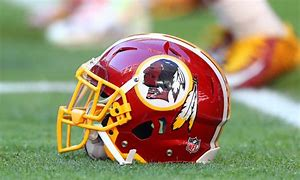
Blackhawks, Redskins, and Braves: A History of Ignoring Native Voices

Mascots are an important part of sports at all levels. A mascot is used to represent the team, players, and its fans. Are the players dangerous like an apex predator or rich with history like a landmark or historical name. Mascots should be fun but sometimes can take a turn for the insensitive

Teams like the Blackhawks, Redskins, and Braves have overstepped their boundaries and ignore native American voices by pushing caricatures of cultures as their “mascots”. The Redskins have arguably caught the most heat out of this bunch because the name is so blatantly offensive coupled with the red “Indian” face that goes along with it

People paint their faces red, and wear feathers in their head and continue this almost movie like perception of Native Americans. Native American voices are often pushed to the side and if sports were as inclusive as they say they are, they would listen to these voices and act accordingly.

Best Goal Songs in the NHL

The history of goal horns and songs is a long one. But in recent years, NHL teams have revamped not only their horns but also added songs after the horns to stay fresh with the new style of hockey. Every goal horn is unique and with a unique horn comes unique songs to go with them. Here are some of my personal favorites.

  1. Chicago Blackhawks: Chelsea Dagger by The Fratellis
  2. Boston Bruins: Kernkraft 400 by Zombie Nation
  3. Toronto Maple Leafs: You Make My Dreams by Hall and Oats
  4. Buffalo Sabers: Let Me Clear My Throat by DJ Kool
  5. Washington Capitals: Every player chooses their own

Best Sport Cities

  1. Boston

It would be hard to make a list of best sport cities and not include Boston. As someone who is not a fan of any Boston teams, it can be frustrating on the outside looking in. The Legacy speaks for itself: Patriots with six Superbowl wins, Red Sox with nine World Series wins, Celtics with seventeen titles, and the Bruins with six Stanley Cup Wins.

  • New York

Despite the rocky history with a lot of the sports in the city. The fans show up regardless; they are as passionate as they come and often think that their teams are better regardless of standings. Yankees fans are arguably the most rapid fans in sports.

  • Chicago

Another city with a rich history of sports. So many original teams in their sport; teams with years of history which comes along with lots of fans. Chicago was already a hub for baseball but became a hockey meca after the Blackhawks Stanley Cup runs

  • Philadelphia

When you think about rabid fans, Philly must come to mind. It is no surprise they are as rabid as they are when you consider the teams that are in the area. Flyers, Eagles, and Penguin fans are passionate about their Philly teams

  • Los Angeles

It’s California dreaming when a city has the Lakers, Clippers, Dogers, and Kings, three of which play in the same building. Fans in the Los Angeles area make sure to show up for their teams.

NHL Awards: Who Would Have Won What

The NHL regular season was ending before the season had to be shut down due to COVID-19. So many questions are still up in the air for how the rest of the season will play out, including if the season will be able to finish all together. Something we may never get to know is who would have won big at the annual NHL Awards that happens during the summer after the Stanley Cup finals. Writers and broadcasters within the sport come together to vote for who they think best represents the award description. So, I am here to give my opinion on who should have won.

  1. Lady Byng winner: Nathan Mackinnon (Colorado Avalanche)

Starting off the list with what is in my opinion the most subjective of all the awards. This trophy is supposed to go to the most gentlemanly player. I think this award is subjective mostly because what makes someone a “gentleman” especially in a high contact sport like hockey. Also, who would sports writers know if they are not on the ice themselves. I perceive the award as the player who gives his all every game and plays the sport with heart and respect. Watching Nathan Mackinnon is a treat in of itself and you could argue he carried the Avs when both Gabriel Landeskog and Mikko Rantanen were out with injuries.

  • Jack Adams Award Winner: John Tortorella (Columbus Blue Jackets)

Which coach stood out among the rest and led his teams to bigger and better expectations? This award is the hardest to figure out for me. The season itself can be summed up by players leaving and injuries. It came down to Paul Maurice, the head coach of the Winnipeg Jets, and Tortorella. Both has similar struggles to face going into the season. Winnipeg lost most of the its veteran defensive core (a strong point of the team) while Columbus lost its star forwards due to free agent trades. Both teams have low expectations going in and exceeded them. I have Torts the upper hand because Columbus is in a harder division (the metropolitan).

  • Selke Trophy: Sean Couturier (Philadelphia Flyers)

The Selke is awarded to the best two-way center. Two way meaning they responsible not only in their offensive zone but also the defensive zone, a feat for forwards. Couturier has been an underrated center for most of his career. His 56.25 corsi (possession numbers) proves that he is a big part of the Flyers success this season.

  • Vezina Trophy: Connor Hellebuyck (Winnipeg Jets)

Awarded to the goalie that best helped his team. Hellebuyck is a lay up for this award that is voted on by NHL GMs. Hellebuyck has the most appearances for the starting goalie and has faced the highest danger shots out of any goalie in the league. His stats this season includes 58 appearances with a .922 save percentage; he also has a whopping six shutouts to top it all off.

  • Calder Trophy: Quinn Hughes (Vancouver Canucks)

The best rookie of 2019-2020 is a debate that has gone of more most of the season now. The two rookies in question have been 20-year-old defensemen Quinn Hughes, and 21-year-old defensemen Cale Makar (Avalanche). What makes this debate so heated is that the players are both defensemen, a rarity for this award since it is known defensemen often take time to “mature” versus forwards. Quinn accumulated 53 points in 68 games and plays are a “inferior” team compared to Makar.

  • Norris Trophy: John Carlson (Washington Capitals)

Carlson should take the title of the best defensemen in the league. It is quite ironic since his best career season really has nothing to do with his defensive qualities, but his offensive ones. The fact that he can be on a team with the likes on Alex Ovechkin, TJ Oshie, Jakub Vrana, and Nick Backstrom and still hold your own offensively is impressive. Carlson’s 1.09 points-per-game average is the highest for any defenseman since 1993-94. His prowess begs the argument that always comes up for the Norris. Should there be two awards: best defensive defensemen and best offensive defensive?

  • Hart Trophy: Leon Draisaitl (Edmonton Oilers)

The biggest award of the show; who will receive the honor of being the MVP of the season. If the season would have went as played, it would have been a given that Draisaitl would have won his first Art Ross Trophy for most points in the league. Being a line mate with Connor McDavid is a blessing and it can be a curse. Draisaitl proved that he does not need his line mate to be a great player when McDavid went down for two weeks with an injury. It is hard to look at his stats are and argue with them.

Why What Happened To K’Andre Miller Did Not Surprise Me

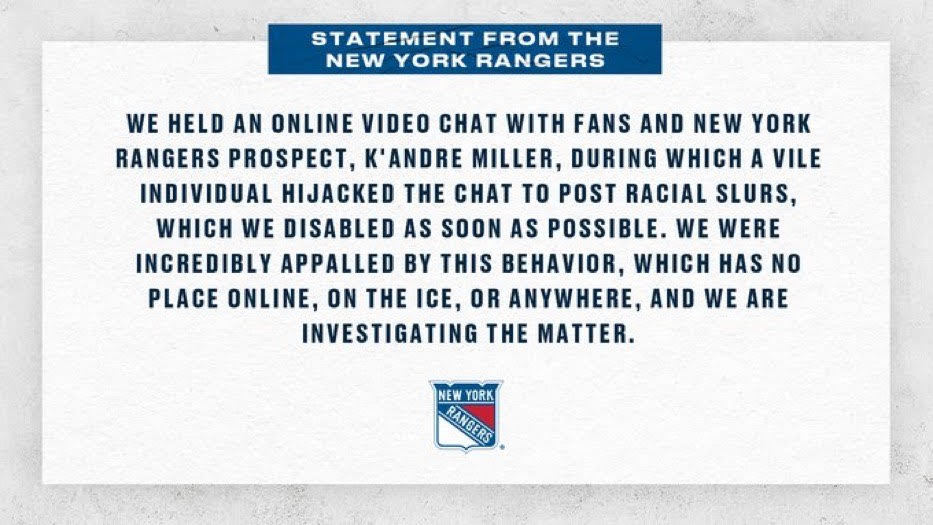
On Friday, April 3, the New York Rangers hosted a Zoom Conference for their newly signed defensemen K’Andre Miller. The point of the Zoom was to introduce the Rangers fans to one piece of the Rangers future; it was unfortunately ruined when someone in the chat flooded the comments with vile, racist comments against Miller.

Rangers fans, and even other hockey fans, were quick to point this out and started tweeting at the official New York Rangers Twitter begging for the organization to address the gross act that happened to Miller. It took the Rangers (and the league) four hours to release a statement about the incident.

None of this surprises me. As a black, female hockey fan, I am hyper aware of the social issues that plague the hockey as a sport. Racism, classism, sexism, homophobia, etc. all fester in hockey starting at the grass roots level. Just in December 2019, former Calgary Flames Head Coach Bill Peters resigned after it came out that he used racial slurs when describing Akim Alui’s (a black player) choice of music. After the incident, Wayne Simmons, a seasoned veteran, said he was sure every black hockey player has been called a slur.

It is accounts like this that makes me, a black fan, worried for the people of color in the league (and the ones that dream about it). Hockey does not reflect the fans the way other sports do. It is time to have an honest conversation about how hockey has a racism problem; it alginates people based on things they cannot change. It is up to the players, coaches, fans, organizations, and media at all levels to take this effort on. I want to be proud of the sport I love, and I want hockey to truly be for everyone.

Design a site like this with WordPress.com
Get started